What is Better: Fiber vs Cable Internet Plans? Every person who plays games and loves watching broadcast channels needs to know the answer to this question. Both types of connections are designed to give speedy internet, but in different ways. A simple understanding of concepts is going to make selecting the ideal internet plans easy for every gamer without any blockages.
Fiber vs Cable Internet: What Are the Core Differences?
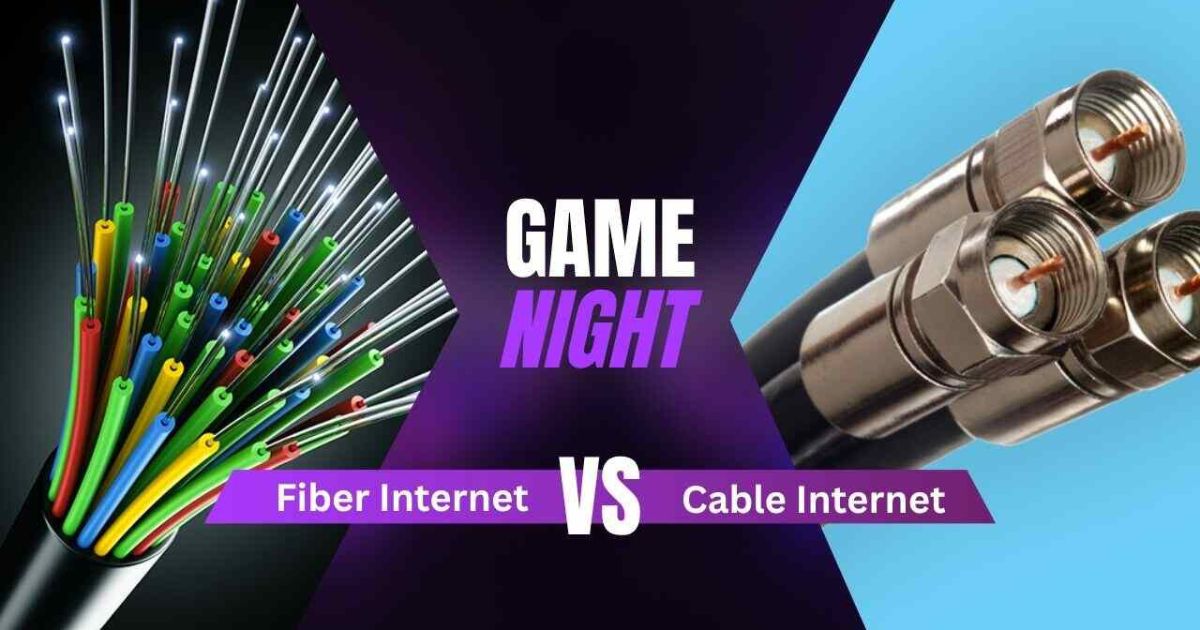
Fiber optic technology helps in the delivery of internet services by making use of glass or plastic fibers to send data as pulses of light. This technology offers super-fast speed internet connections that are stable and reliable.
Cable internet, on the other hand, utilizes copper coaxial cables to carry electrical signals. This technological distinction determines the performance parameters of each service, including speed, reliability, and latency, which are crucial for gaming and streaming.
Claim Your $100 Discount—Call Now: +1(855)375-6541Speed and Performance: Key Features for Gamers and Streamers
One of the biggest advantages of fiber optics is the speed it offers, both download and upload. Fast internet plans are available with a minimum of 300 Mbps and more than 5 Gbps symmetrical. This is crucial to media personalities for HD video stream uploads and to gamers for low-latency situations.
Cable internet subscriptions also allow huge and fast downloads of content of 1 Gbps or more; however, the upload capacity remains relatively poor, mostly around 50 Mbps or so.
| Feature | Fiber Internet | Cable Internet |
|---|---|---|
| Download Speeds | 300 Mbps to 5 Gbps+ (symmetrical) | 100 Mbps to 1 Gbps (faster downloads, slower uploads) |
| Upload Speeds | Matches download speeds (symmetrical) | 5 Mbps to 50 Mbps |
| Latency | Very low and stable | Moderate, can vary with congestion |
| Reliability | Highly reliable, minimal interference | More prone to signal loss and congestion |
| Typical Monthly Price | $50 to $150+ | $30 to $100+ |
| Availability | Limited but expanding | Widely available |
Internet Packages Price: What to Expect in 2025
Fiber is typically priced at a higher tier but gives better overall value for gamers and streamers who require stable high-speed Internet service with no interruptions or data limits. Prices start at about $50 and may rise to over $150 for gigabit or multi-gigabit plans.
Since cable prices are lower at entry, they start at around $30, and some attractive bundles with TV or phone may be bundled. Some cable plans, however, carry data caps, equipment rental fees, or a prompt hike in costs once the promotional period is over.
Call Now: +1(855)375-6541Fiber vs Cable Internet Plans: Cost Factors
Users of fiber optics are mostly offered packages with high initial payments as opposed to residents on cable plans, who pay less at the beginning but eventually get similar levels of quality. Compared to these cases, there’s no data over-usage plans and the least of additional charges, thus perfectly suiting the interests of both gamers and streamers.
In general, most cable internet plans come with lower starting prices and are bundled with either the TV or Phone Internet services for an additional discount. In turn, some cable services may have limits on the amount of data consumed, the need to rent equipment, or even an increase in prices post the promotional period.
Things to Consider Before Choosing Fiber vs Cable Internet Plans
- Upload: To be able to stream in HD, a streamer would need a minimum of 5 to 10 Mbps of uplink speed. Where fiber optics has the advantage is in the symmetrical speeds that it offers.
- Latency: The faster the latency, the better the playability. In this respect, fiber is known to be sharper than cables.
- Stability: Congestion in the networks affects all connections, but less so in fiber optic networks, and therefore, performance is more reliable.
- Budget: If the fiber optic cables are unavailable, then maybe it is cheaper to indulge in cable with decent speeds.
- Plan Terms: Choose the options that come without restrictions such as data caps or contracts, for such is more reasonable.
5G Home Internet: A Wireless Alternative
5G home internet is positioned against its cable counterparts as it also wirelessly provides almost equivalent bandwidth to middle-tier cable internet plans. 5G technology is an enhancement of the internet; however, it is unable to guarantee stable data rates, which makes it less competitive in the internet market.
As of now, it is best utilized for browsing and streaming while playing games for comfort due to high latency and speed fluctuations.
Call Now: +1(855)375-6541Bottom Line!
Those who engage in gaming and streaming can consider fiber internet plans. Such plans offer the top speed with the best reliability and reduced latency important in ensuring an enjoyable gaming experience without lagging. As fiber coverage is not extensive and many people cannot afford it, cable internet is a good compromise. Also, it is advisable to undertake an evaluation of high-speed internet plans from different providers, especially those that may be present in the locality, and look for new options, like 5G Home Internet.